Forty Bulbs, One Cul-de-Sac: The Quorndon Street Where Christmas Starts with a Flick
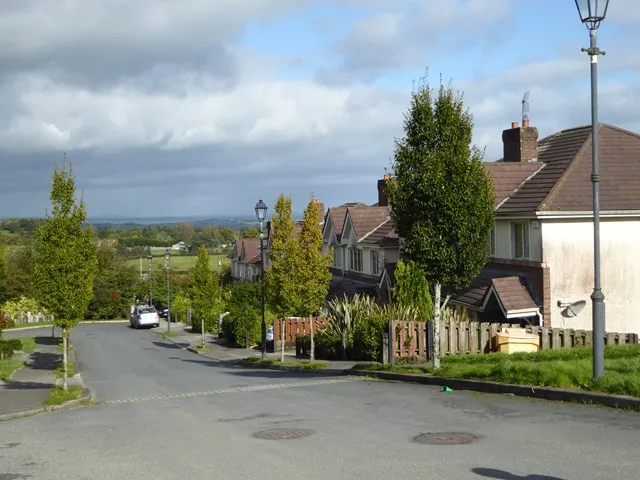
Photo: Oliver Dixon , CC BY-SA 2.0, via Wikimedia Commons
On an ordinary November evening, most cul-de-sacs in Quorndon look much the same. Wheelie bins wait at the kerb. A cat sits on a wall as if it owns the place. Somewhere a car reverses slowly, and a porch light clicks on and off for no clear reason.
But on one quiet street on the north side of the village, something else is happening. In a garage, a box is being lifted down from a high shelf. It is marked, in fading marker pen, 'Do Not Lose'. Inside are fairy lights. Not smart lights, not app-controlled lights, not lights that can be made to pulse in time with Mariah Carey. These are old bulbs: fat, warm, slightly mismatched, and older than some of the people who will come to see them switch on.
The cul-de-sac that blinks first
Every village has its unofficial start to Christmas. For some it is the church service, for others the first mince pie, the school nativity or the point at which someone finally admits the inflatable Santa has to go up. On this street, Christmas starts when a neighbour climbs a step ladder, reaches for a plug and waits for the countdown.
It is not a grand event. There is no funfair, no celebrity, no heavy traffic management. There is a flask of tea, a plate of sausage rolls and a crowd of people in coats who have done this so many times that they know exactly where to stand. The children are less interested in ceremony and more interested in whether the switch will work first time. It usually does. Usually.
How one extension lead became a street tradition
The story begins around four decades ago, when one household decided to put a string of lights along its front hedge. It was not intended as a village event. It was simply a bit of festive cheer, the kind of thing that made the dog walkers smile and the postman mutter something approving.
Then a neighbour did the same. Then another. An extension lead was passed over a fence. A timer was borrowed. Someone offered a spare set of bulbs. Within a few years, the cul-de-sac had developed a shared look: warm white along the eaves, a few coloured lights in the shrubs, and one enthusiastic household that always went a little further.
The switch-on itself grew more slowly. At first it was a handful of people standing at the end of a drive, mugs in hand. Then someone brought a radio. Then someone brought a child. Then someone brought a better radio. Now it is a fixture: a short, cheerful gathering that draws neighbours from other streets and raises a few pounds for a local cause through a tin on a garden wall.
The ladder, the flask and the box marked 'Do Not Lose'
Behind the scenes, the operation is more careful than it looks. The old bulbs are checked in late October. The ladder is borrowed from a neighbour who insists on supervising. The extension leads are tested, labelled and coiled with the seriousness of a small engineering firm. There is a rota, though nobody calls it that. There is also a rule, repeated every year: do not put the lights up before Remembrance Sunday.
One of the organisers, who has lived on the street for more than thirty years, told us the box of old bulbs is the most precious item in the garage. 'We have newer lights,' she said. 'But these are the ones people ask about. They remember them from when their children were small. They remember standing here with a buggy and a plastic cup of squash. You cannot buy that.'
That sense of continuity is what makes the evening feel bigger than it is. The street does not try to compete with the grand displays in town. It simply does its own small thing, year after year, with the same box, the same ladder and roughly the same jokes about who has the longest extension lead.
Why the old bulbs still matter
It would be easy to replace the lot with something brighter and more efficient. The old bulbs use more power, and one or two flicker in a way that suggests they are doing their best. But the point is not efficiency. The point is recognition. These are the lights that have watched the street change: babies become teenagers, teenagers leave home, new families arrive, old neighbours are missed.
The switch-on is also a reminder that community does not always need a committee, a constitution or a grant application. Sometimes it needs one person to say, 'Shall we do it again this year?' and enough others to answer, 'Go on then.' That is how most good village things start.
What happens on the night
This year's switch-on is set for Friday 27 November, with the countdown at six o'clock. The organisers are keeping it simple: lights, a short countdown, a collection tin and an open invitation to anyone who fancies a bit of company. If it rains, they will stand under umbrellas. If the bulbs misbehave, someone will give the plug a wiggle. If the sausage rolls run out, that is a crisis for another year.
What matters is the moment the lights come on. For a second, the ordinary cul-de-sac becomes something else: a small stage, a meeting place, a sign that the darker evenings are not going to have it all their own way. Then the children run about, the adults chat, and someone says, as they do every year, 'Well, that's Christmas started.'
And it is. Not because of the bulbs, really, but because of the people standing under them.