Signed in Clay: The Brickmakers’ Marks Hiding in Quorndon’s Walls
Photo: Dale Cruse, CC BY 2.0, via Wikimedia Commons
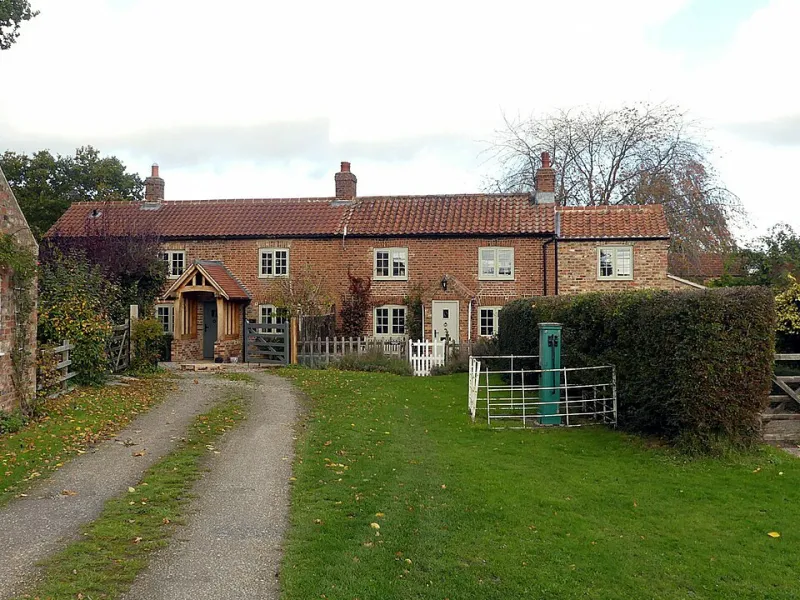
Bricks are the least boastful building material. They hold up walls, take the weather and ask for nothing. But now and then one carries a mark: a pair of initials, a date, a thumbprint in the clay, a repair scar in the mortar. In Quorndon, these small signatures are everywhere once you start looking. They are not grand memorials. They are the quiet pride of people who signed their work without expecting an audience.
I went looking for six. I have kept addresses vague and changed a couple of small details where a wall belongs to a private garden. The point is not to turn the village into a quiz. It is to notice what the bricks remember.
1. The gatepost brick with a thumbprint date
The first mark I found was on a garden gatepost: T.H., then 1897, pressed into the clay before firing rather than carved afterwards. The letters are slightly uneven, as if the maker was working quickly. Near the H is a smudge that looks very much like a thumbprint. The owner of the wall told me her family had always assumed T.H. was a local builder, but nobody had ever proved it. That uncertainty is part of the charm. The brick does not give us a full story; it gives us a hand.
2. The outbuilding brick signed by two brothers
High in a lean-to wall, where you have to step back to see it, are the initials W.S. and J.S. with the date 1932. Two sets of initials side by side suggest two people, perhaps brothers, perhaps a partnership. The mortar around them has been patched more than once. What strikes me is the placement: not hidden, exactly, but not shouting either. It is the kind of mark you make when the job is done and you want to leave a trace for whoever comes next.
3. The churchyard edge brick with a repair scar
At the churchyard edge, a low wall carries R.M. 1911 and a long, pale scar where a section was rebuilt. The scar is not damage in the usual sense; it is a record of care. Someone noticed the wall was failing and mended it. The initials may belong to the original bricklayer or to the person who paid for the work. Either way, the wall has become a small archive of maintenance: original brick, later mortar, a modern patch doing its best to blend in.
4. The garden wall brick with a nickname
One brick in a garden wall carries the word Nib and the date 1948. Not initials, not a surname: a nickname. The wall’s owner said her father was known as Nib all his life, though she never knew why. He built the wall with a friend and, according to family legend, insisted on leaving his nickname in one brick. It is a lovely thought: a private joke set in clay, visible to anyone who looks but meaningful only to a few.
5. The chimney brick that moved house
A brick with a small cross and the letter Q sits in a rear extension, reused from an older building that once stood nearby. It has travelled perhaps ten feet and a century. Reused bricks are common enough, but this one feels like a reminder that Quorndon’s walls are not always fixed. Buildings come down, bricks are cleaned and laid again, and old marks end up in new places. The brick has not lost its signature; it has simply changed address.
6. The boundary brick with no name at all
The last brick I found had no initials, no date, no nickname. It was just a brick, slightly crooked in its course, with finger marks along one edge where the clay was handled before firing. It is the most honest mark of all. Most work in any village is unsigned. The people who laid it are part of the wall anyway.
A word on looking
If you go brick-spotting, do it gently. Stay on public paths, do not lean over private walls, and never chip away mortar to see a mark more clearly. A photograph from the pavement is usually enough. The pleasure is in the noticing, not the collecting.
Quorndon’s walls are not just boundaries. They are ledgers written in clay, one brick at a time. Next time you pass a wall, slow down. Someone may have left you a signature.