Twenty-Four Glowing Doorsteps: Walking Quorndon’s Living Advent Calendar
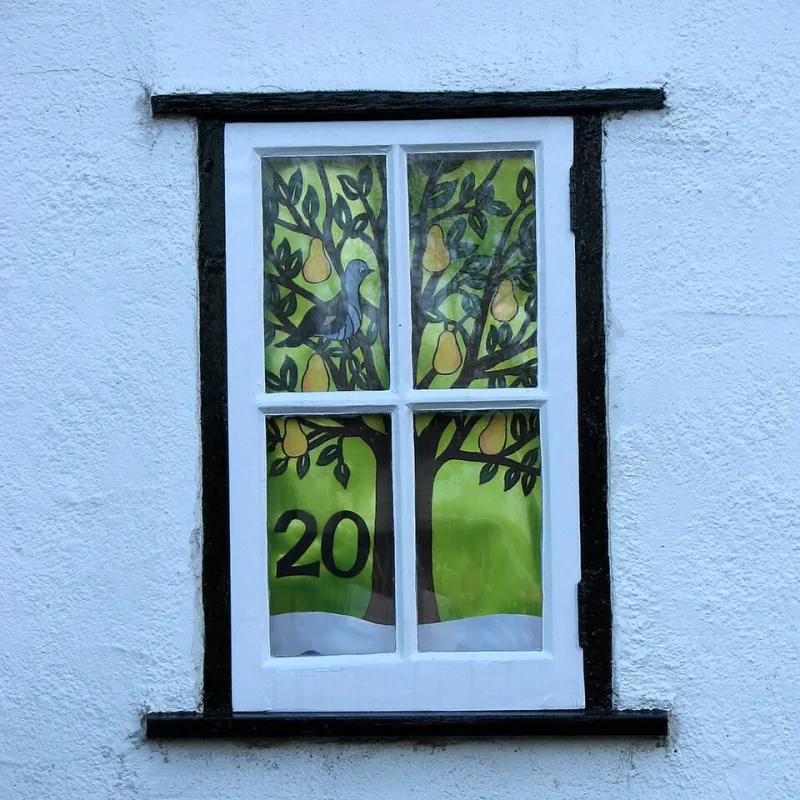
Photo: John Sutton , CC BY-SA 2.0, via Wikimedia Commons
December in Quorndon has a particular sort of darkness. Not the dramatic, moorland kind, but the soft, early, pavement-hugging dusk that arrives before the school run has even finished. And into that dusk, one by one, come the windows.
You have probably seen them without quite realising you were following a trail. A lit-up star in a front room. A paper-cut angel taped to a bungalow pane. A tiny wooden stable glowing between the curtains. Each December, a loose collection of households across the village turns its front window into a living advent calendar — one new scene revealed every evening from 1 December to Christmas Eve. No grand switch-on, no ticketed entry, no official map pinned to the village hall door. Just neighbours, a few extension leads, and a shared understanding that the walk is better when you take it slowly.
How a Village Became a Calendar
The idea is simple enough to explain over a pint: twenty-four windows, twenty-four nights, one village. In practice, it is a small miracle of coordination. Someone keeps a list. Someone else drops off a spare set of battery fairy lights. A household that has done it for years gently nudges a newcomer who mentioned, in passing, that they “might do something”.
The scenes are not numbered in any bossy way. A few windows have a discreet card in the corner — “Day 7”, “Day 18” — but most rely on word of mouth and a general sense of which streets to wander down. On the first evening, you might find a single square of warm light at the end of a cul-de-sac. By the middle of the month, the trail has spread like a rumour.
What makes it work is that it asks almost nothing of the walker. You do not need to book, pay, or dress up. You need a coat, perhaps a torch, and the willingness to look up at windows you normally pass without a second glance. Children tend to lead the way. Dogs come along and pretend not to be interested. Someone usually ends up carrying a flask.
The Makers Behind the Glass
Ask the households why they do it and the answers are refreshingly unsentimental. “It gets me to tidy the front room,” one maker laughs. Another admits she started because her grandchildren were small and it gave December a shape. A third says he enjoys the challenge of making something out of cardboard, baking parchment and a set of cheap LED lights.
The scenes themselves are a mixed bunch in the best possible way. There are careful felt nativity figures and there are gloriously wonky snowmen made from cotton wool. One window might hold a miniature village of cereal-box houses; another simply displays a single candle and a hand-written line from a carol. Some makers change the whole scene nightly. Others reveal a section at a time, like a slow-motion pop-up book. The common thread is not craft skill but a willingness to be seen — to put a little of your home on the pavement, so to speak, and trust that passers-by will treat it kindly.
That trust is part of the charm. In a village where everyone knows roughly who lives where, the advent windows offer a gentle way of saying, “We’re here, and we’re glad you’re passing.” It is neighbourliness without the pressure of a conversation. A nod through the glass is enough.
Walking the Trail
The practicalities are straightforward. The trail runs every evening in December up to Christmas Eve, though the best hours are between about 4.30pm and 7pm — early enough for younger children, late enough for the lights to show. Wrap up warmly, bring a small torch for the darker corners, and keep to the pavements where you can. Some streets are busier than others, and a few windows are best viewed from across the road rather than pressed up against the glass.
If you are new to the village, start near the centre and follow your nose. The trail tends to cluster: a few windows on one street, a gap, then another little constellation. Ask at the shop, or simply look for the small groups of people in bobble hats pausing at a garden wall. They are almost certainly on the same errand.
For those who prefer a purpose, there is a certain pleasure in ticking off the nights. But the real reward is repetition. Walk the same route three or four times across the month and you notice different things: the way a scene has been subtly altered, the extra string of lights added after a windy night, the fact that a household has left a small box of sweets out for visitors. These are the details that turn a trail into a tradition.
A Calendar You Can Stroll
There is something quietly old-fashioned about the whole enterprise, and not just because advent calendars themselves feel like a relic of childhood. It is the pace of it. December has a way of becoming a list of tasks — cards to write, presents to wrap, food to order. The advent windows ask you to do the opposite: to leave the house with no particular aim, walk a loop of familiar streets, and let the dark do the rest.
It is also, in its own modest way, a piece of village history in the making. A few years from now, people will talk about “the year the windows went all the way up the hill” or “the house that did the whole twelve days of Christmas in one pane”. The trail has no archive, no committee, no official record. It exists only in the walking and the remembering.
The Quiet Magic of Showing Up
So if you find yourself in Quorndon on a dark December evening, look for the glow. It might be a single window at the end of a terrace, or a whole row of them blinking into life as the streetlights come on. Stand for a moment. Let the cold settle on your shoulders. Then carry on to the next one.
That is the whole invitation. The village has made a calendar of itself, and all you have to do is turn up.