Chime After Chime: Meet the Villagers Who Look After Quorndon’s Clocks
There is a particular kind of Quorndon person who notices clocks. Not in a ticking-off-the-seconds way, but in the way you might notice a neighbour’s gate has been oiled or a hanging basket has been refreshed. They are the ones who look up, squint, and say, “That’s about right,” before carrying on with their shopping.
As November settles over the village and the afternoons draw in early, those glances upwards become more frequent. A clock is a small thing to rely on, but Quorndon relies on several of them. And behind each one is a person with a ladder, a key, a notebook, or simply a stubborn sense of duty.
The tower, the hall and the bakery
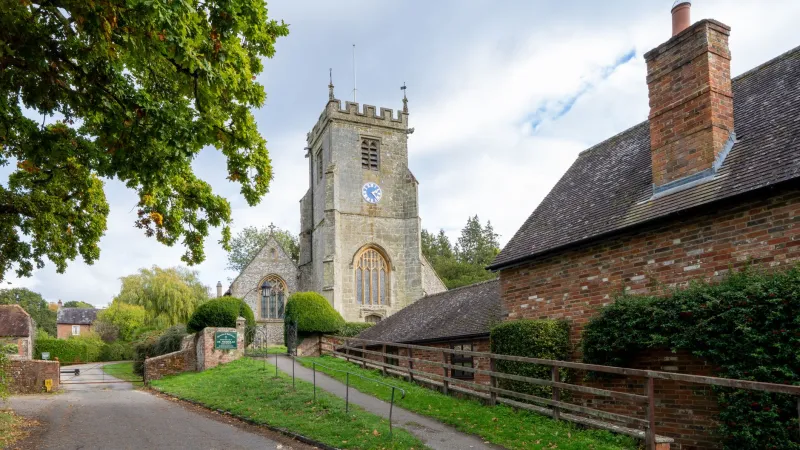
The church tower clock is the grand old statesman of the group. It does not hurry. It has seen weddings, funerals, harvests and at least one memorable occasion involving a runaway bouncy castle. Keeping it in order is less about glamour and more about patience — and knowing which local firm to ring when something goes clunk in the night.
Then there is the village hall clock, the reliable middle child. It hangs above a noticeboard thick with yoga classes, quiz nights and a poster for a missing cat that was found before the poster was even printed. The hall clock is checked by the caretaker, adjusted when the power trips, and generally treated with the sort of affection usually reserved for a dependable kettle.
And then there is the clock above the old bakery. It is five minutes fast. It has been five minutes fast for years. Nobody quite knows why, and nobody quite wants to find out.
A rota written in pencil
Margaret Rennocks has been part of the informal clock-watching crew for longer than she cares to tot up. She keeps a pencil-written rota in a drawer, though she admits it is more of a prompt than a schedule.
“It’s not a committee,” she says, laughing. “If it were a committee, we’d have minutes. We’ve got a drawer and a spare key, and that’s about the size of it.”
Margaret’s role is mostly observational. She walks past the church on a Sunday, checks the tower clock against her wristwatch, and rings the vicarage if something looks off. She has never actually climbed the tower. “I’m more of a ground-level inspector,” she says. “I do my best work from the pavement.”
At the village hall, Dennis Sculthorpe takes a more hands-on approach. He has a step ladder, a small toolbox and a healthy suspicion of anything with a digital display. When the hall clock stopped for three days last winter, Dennis traced the problem to a loose connection and a plug that had been nudged by a vacuum cleaner.
“It’s usually something simple,” he says. “Clocks are like people. They don’t stop for no reason. They stop because something’s been knocked, or because they’re tired, or because somebody’s been hoovering where they shouldn’t.”
The five-minute mystery
The bakery clock is a different matter. The old shop below it has long since changed hands, but the clock remains, jutting out over the pavement like a small act of defiance. It is five minutes fast. Ask five villagers why and you will get five different answers.
The most popular story is that a former baker set it forward to stop early-morning customers arriving before the bread was ready. Another version says it was adjusted during a power cut and simply never corrected. A third, rather more romantic theory claims it was done deliberately so the baker’s wife would never miss the bus.
What is certain is that attempts to correct it have not gone well. A few years back, a well-meaning newcomer with a ladder and a sense of civic duty tried to put it right. By the following week it was fast again. Whether it was adjusted back by a traditionalist, disturbed by the wind, or simply exercising its own quiet will, nobody can say.
“People rely on it,” says Anita Bream, who runs a nearby shop and fields regular questions about the clock. “If you’re walking to the station, you see five minutes past and you think you’ve got time. And you do. It’s a little buffer. It’s Quorndon’s way of being kind.”
The gentle art of leaving well alone
There is a lesson in the bakery clock, and it is not really about timekeeping. It is about the village’s instinct to leave certain things be. Quorndon has plenty of fixers — people who oil hinges, clear drains, put up shelves and quietly return stray wheelie bins — but it also knows when a small imperfection has become part of the furniture.
The fast clock is not broken. It is doing a job, just not the one printed on the tin. It gives people a five-minute cushion. It gives visitors something to talk about. It gives the village a tiny shared secret, visible to anyone who looks up.
And in a place where so much has changed — shops closing, new houses appearing, old pubs falling silent — there is something comforting about a clock that is reliably wrong in the same direction it has always been.
Time, but make it village
So the next time you are in Quorndon and you glance at the old bakery clock, remember the people behind it. Not the baker, long gone, but Margaret with her pencil rota, Dennis with his step ladder, and the unnamed handful of others who notice when a hand sticks or a chime goes quiet.
They are not clockmakers. They are neighbours. They keep the village ticking in the way Quorndon has always done — quietly, slightly imperfectly, and with a strong preference for not making a fuss.
And if the bakery clock is five minutes fast, well, perhaps that is simply the village’s way of saying: you have got a little time. Use it kindly.