Grate Expectations: The Water That Still Runs Beneath Quorndon
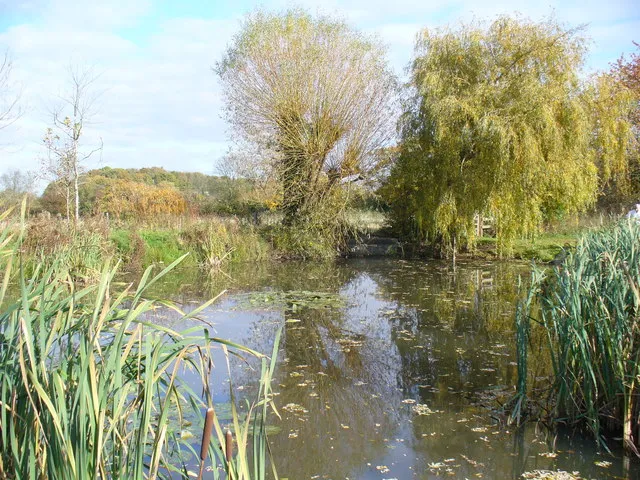
Photo: Colin Smith, CC BY-SA 2.0, via Wikimedia Commons
On a cold Tuesday morning, with the pavements doing that November shine, I stood at the edge of Quorndon and listened to water. Not the Soar, not a tap, not a gutter running after rain. This was a low, busy mutter coming up through an iron grate. If you have walked the village with your coat collar up, you may have heard it too: the brook that mostly keeps its own company beneath our roads and gardens.
The brook does not announce itself. There is no blue line on the average street map, no riverside bench, no sign saying ‘View’. Instead there are grates, gullies, odd damp patches and the occasional neighbour who says, ‘Oh yes, that runs under here.’ I wanted to follow it, not by lifting covers or trespassing on anyone’s garden, but by walking from grate to grate and asking what people remember.
Starting with a sound
My first stop was a grate near the older part of the village, where the water makes a hollow clatter under a parked car. A woman unloading shopping listened when I asked, then nodded. Her grandmother, she said, used to warn children not to play near ‘the brook end’ after heavy rain. It was not a dramatic warning, just the sort of practical note passed down in families. That phrase — the brook end — stayed with me. It suggests a place that used to be more visible, more of an edge, before kerbs and tarmac tidied it away.
What the maps remember
Old maps are useful, but they do not agree with each other. On one, a thin blue thread loops behind gardens; on another it is a dotted line, half suggestion, half apology. The culverting happened in stages, as roads were widened and buildings spread. That is the story of many English villages: water first, houses second, drains third, memory last. In Quorndon, the brook’s route is less a secret than a habit nobody has needed to explain for decades.
A retired engineer I spoke to was careful not to overstate things. He said the brook is ‘mostly a surface-water matter now’, but that its old channel still matters when the ground is saturated. That is the practical heart of this walk. A hidden stream is not just folklore; it is drainage, levels and the reason a certain corner of a garden gets soft in winter.
Grate by grate
You can trace a surprising amount by eye. Look for the low points: the gully where leaves gather, the grate that never quite clears, the wall stained a darker shade at its base. None of these prove a route on their own, but together they form a rough line. I followed one such line past a reminder of the village’s railway past, then behind a row of houses where a drain cover sits like a metal patch on the pavement.
I did not open anything. That is not the point, and it is not safe. The pleasure is in paying attention: the sound changing from a mutter to a gurgle, the sudden smell of wet stone, the way a frosty morning makes the water’s breath visible where it meets cold air.
Flood marks and neighbourly knowledge
Every village has its flood stories, and Quorndon is no exception. The ones I heard were modest — a driveway that becomes a pond, a back gate you cannot use for an hour, a soakaway that has seen better days. But modest stories are still evidence. They tell us where the ground is doing more work than the drains.
One neighbour remembered helping to clear a grating with a rake when the water rose one winter. ‘It was not heroic,’ she said. ‘It was just what you did before it got worse.’ That is the quiet citizenship of a village: not a committee, not a campaign, just someone in wellies doing a small useful thing.
A walk that asks rather than tells
By the end of my walk, I had not solved the brook. I had a line on a map, a handful of memories and a new respect for the word ‘culvert’. But I had also seen the village differently: as a place built over something that still moves. The brook is not lost, exactly. It is simply out of sight, doing its old job under our feet.
If you go looking, take care. Stay on public paths, do not lift drain covers, and do not assume a wet patch is a right of way. Take a torch, wear something sensible, and ask before you peer over a wall. The brook has kept its own counsel for a long time. A winter walk is a good way to listen, but it is not an invitation to interfere.
And if you hear that low mutter by a grate this week, pause for a second. It is not just drainage. It is the older shape of Quorndon, reminding us that water always remembers the way.