Press Record, Quorndon: Why This Saturday Is Worth Keeping Until 2126
There is a particular sound Quorndon makes on a Saturday morning that nobody has ever thought to write down. It's the scrape of a bin lid, the low diesel mutter of a car idling outside the Co-op while someone nips in for milk, the two-second pause before a neighbour decides whether to say "morning" or just nod. It is entirely unremarkable. It is also, according to a small group of villagers, precisely the sort of thing that vanishes first.
That's the thinking behind One Ordinary Saturday, a 2026 collecting project run out of the village archive with help from a handful of volunteers. The idea is simple: rather than asking people for big stories, they are asking for small ones — voice notes, phone recordings, a few minutes of a street on a normal weekend. No editing required, no script, no need to sound like a BBC presenter.
Where the idea came from
Ruth Ellison, who has spent the best part of a decade helping to catalogue photographs and documents from the village's past, says the gap became obvious when she was working through a box of letters from the 1950s.
"We had a lovely set of letters about a village fete," she says. "Beautifully written, lots of detail about the bunting. But nobody had written down what the fete sounded like, or what anybody ate, or whether the children were bored. It was all the official version and none of the ordinary version."
The project picked up momentum after an informal meeting in the back room of a local pub earlier in the year, where a dozen residents turned up with phones in hand and a collective question about whether a recording made on a handset was really 'proper' archive material. The answer, Ruth says, is yes — with a few sensible caveats about file formats and permissions.
"We are not looking for polished oral history," she says. "We are looking for the texture. If a delivery van interrupts you, brilliant. That's the real thing."
What an ordinary Saturday actually sounds like
To test the approach, we spent a Saturday morning recording our own small loop — nothing staged, nothing planned, just a phone in a coat pocket and a running commentary muttered, somewhat self-consciously, at intervals.
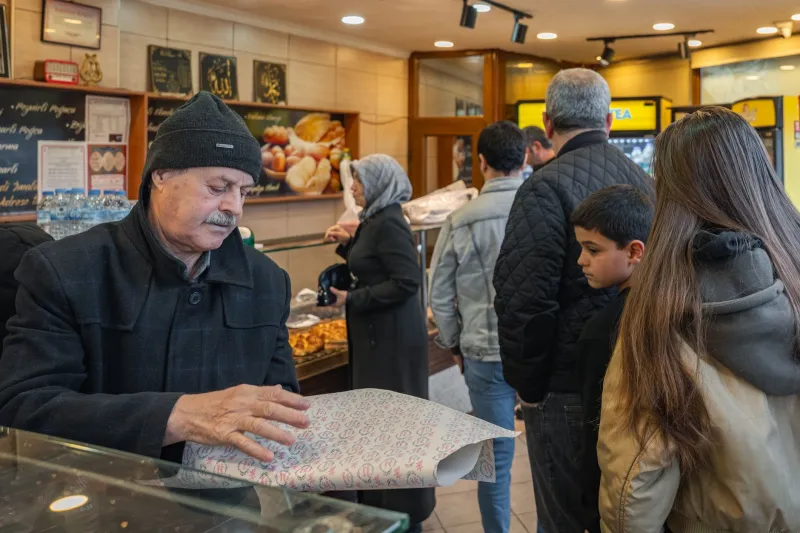
The results were unexpectedly lovely. There's a forty-second stretch outside the bakery at twenty past eight, where you can hear one person insisting there is no need to queue-jump, another saying they aren't queue-jumping, and a third — unidentified — politely telling both of them to get a move on. There's the allotment gate that sticks and has to be lifted to close, a thud that a generation of plot holders could date from memory alone.
Colin Tebbutt, who has kept a plot for thirty-one years, has already contributed four recordings. "I did one of the gate on its own," he says. "Just the gate. My daughter asked what was the point. Then she listened to it back and said it sounded like being seven again."
His advice for anyone self-conscious about taking part: don't try to perform. "Say who you are, say where you are, say what day it is, then just get on with what you were doing. Talk to yourself if you need to. Nobody's going to grade it."
How to take part
The scheme is deliberately low-effort, and there are several ways in:
- Record a voice note. Two to five minutes is plenty. Start with your name, the date and the street you're on — it saves the volunteers a job.
- Capture a soundscape. A minute or two of a place: the school gates at drop-off, the canal towpath, the corner by the church. Background noise is the point, not a problem.
- Send a photograph with a caption. A picture of the bread you bought, the queue you stood in, the repaired fence, and a sentence explaining why you took it.
- Write it down instead. Not everyone wants to be recorded. A short written account, posted or dropped off, is just as useful.
- Say so on the form. There's a simple consent slip so the archive knows it can keep and share your contribution properly. It takes a minute.
- Send it in by the end of the month. Contributions are being gathered in batches, with a first round closing at the end of November so they can be catalogued before the new year.
Anything sent in goes into the village collection and, with permission, may be used in a listening evening planned for spring.
The case for the unremarkable
There's a mild irony here: we are all carrying a high-quality recording device in our pockets, and we almost never point it at anything dull. Birthdays, concerts, first steps — all captured. The ordinary Tuesday trip to the post office, not so much.
But history, when it arrives properly, tends to be interested in exactly the things nobody thought worth noting. Ask anyone who has tried to find out what a vanished shop sold, or how long the walk to the next village took on foot, and you'll hear the same frustration. The big events got recorded. The texture went unrecorded.
This project is also a quietly neighbourly thing, which is part of its appeal. Several of the volunteers have said that asking someone to describe their morning is a far easier way to start a conversation than most. It gives people a reason to knock on a door they've walked past for years.
"It's not nostalgia," Ruth insists. "Nostalgia is looking backwards. This is more like doing a favour for somebody who hasn't been born yet."
Come and see what it sounds like
If you'd rather look before you leap, there's a drop-in session planned at the village hall where the volunteers will play back a few of the recordings already collected and help anyone who is stuck on the technical side. Phones, tablets and old-fashioned paper submissions are all equally welcome.
Two minutes standing at the allotment gate might not feel like much of a legacy. Given a century, it might be the most interesting thing anyone left behind.