The Second Reading: How Quorndon Pupils Put Stories Back Into the Memorial
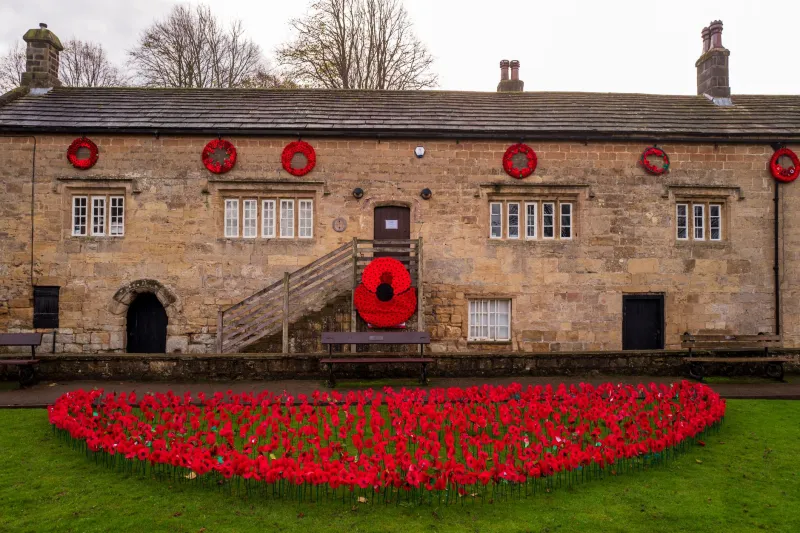
On a damp November morning, the war memorial at the heart of the village can look like what it is: pale stone, neat lettering, a list of dates. But stand there with the group of local students who have spent months on those eleven names and the monument begins to change shape. The dates stop being dates. They become birthdays, enlistment days, the last day a family heard from someone. The regiments stop being abbreviations. They become journeys away from a village street and, for too many, a journey that never came back.
Since the spring, a small band of pupils from a local secondary school has been working with a village historian on a project they describe, modestly, as detective work. Their brief was simple enough: find out who the eleven men named on the memorial actually were. The results have been shared in folders, on a laptop and, increasingly, in conversations around kitchen tables. Ahead of Wednesday's Remembrance ceremony, the group is opening up what they have found — and asking the rest of us to help fill in the gaps.
Starting with a name, not a date
The students began where most family historians begin: with names, ages and the records that sit behind them. Census returns gave them households, occupations and neighbours. Parish records added baptisms and marriages. Old newspapers, school logbooks and local society minutes added the sort of detail that official records often miss — who played cricket, who sang in a choir, who worked at the bakery, who was known for walking a particular route to work.
One pupil traced a family address to a lane that still exists, with a house that still stands. Another found a photograph of a young man in uniform, sent to a local paper during the war and preserved, slightly fuzzy, in an online archive. A third came across a mention of a memorial service held in a village chapel, with a list of hymns that felt, to the student, almost unbearably ordinary. These are not grand discoveries in the way a museum might use the phrase. They are better than that. They are the small hinges on which a life swings.
What the stone doesn't tell you
The memorial records rank and regiment. The research adds the walk to work, the family left behind, the trade learned, the sport played, the letters sent home. It adds the fact that one of the eleven was barely out of school; that another had already moved away but was still remembered here; that a third was part of a family network stretching across neighbouring villages.
The students have been careful not to overclaim. Not every gap can be filled. Some names produce a neat paper trail; others produce silences that no amount of clicking will solve. The village historian has been keen to stress that the project is not about turning men into characters in a story. It is about reading the memorial twice: once as a list of the fallen, and again as a set of neighbours whose lives were woven into the same lanes, schools and shops that we use today.
That second reading is what the group hopes to share this week. They have put together a small display of photographs, maps and extracts, and they are inviting anyone with a connection — however distant — to come and look, correct, add or simply remember.
A ceremony with room for the stories
This year Remembrance Day falls on Wednesday 11 November. The village ceremony will follow its usual pattern: neighbours gathering at the memorial shortly before 11am, a short act of remembrance, the two-minute silence, wreaths laid, and the names read aloud. Organisers ask people to arrive in good time — around 10.40am is sensible — and to wrap up warmly. The silence is the still centre of the morning, but the reading of the names is the part that has taken on a new weight for the students.
After the ceremony, there will be refreshments and a chance to see the project display. The students will be on hand to talk about their research, and the village archive will be open for contributions. If you have a photograph, a letter, a postcard, a medal ribbon, a newspaper cutting or even a family memory that has been passed down without paper, the group would like to hear from you. Nothing needs to be tidy or complete. A name on the back of a photograph is enough to start.
Bring what you have
The archive is not a locked cupboard for experts. It is a conversation, and the students have already learned that the best leads often come from neighbours. A remembered nickname can unlock a record. A family story about a house can confirm an address. A photograph of a street party, a cricket team or a Sunday school outing can place a face beside a name.
So this Wednesday, after the wreaths are laid and the last name has been read, the invitation is simple. Go and look at the display. Ask the students what they found. Tell them what you have. The eleven names on the memorial have already been given one kind of attention — the formal, careful remembrance that the village offers every year. This week they are being given another: the curiosity of young people who wanted to know the men behind the letters. That feels like a good way to keep faith with both the stone and the lives it records.